
Via Francigena in England: Canterbury to Dover Walking Guide
England · ≈ 31 km
Discover where the Via Francigena begins, following an ancient pilgrimage route from Canterbury Cathedral through the beautiful Kent countryside to the historic port of Dover.
The Via Francigena in England marks the beginning of one of Europe's great pilgrimage journeys. Starting at Canterbury Cathedral in Kent, the route travels approximately 31–33 kilometres (19–20 miles) through the English countryside before reaching Dover and the English Channel.
Although the English section is relatively short, it holds enormous historical significance. Canterbury was the home of Archbishop Sigeric, whose journey to Rome in 990 AD provided the most important surviving medieval itinerary associated with the Via Francigena.
Today, walkers follow peaceful country paths, ancient pilgrimage corridors, farmland and traditional Kentish villages before arriving at Dover, where the journey continues across the Channel into France.
The route is generally completed over two days, making it an excellent introduction to the Via Francigena for both first-time pilgrims and experienced long-distance walkers.
Whether you are planning a weekend walking holiday in Kent or beginning the full pilgrimage from Canterbury to Rome, this guide covers the route, walking stages, historical landmarks and practical information you need to get started.
Quick facts
- Route distance
- ≈ 31 km
- Walking stages
- 3
- Entry point
- Canterbury
- Exit point
- Dover (Channel crossing to Calais)
- Terrain
- Rolling farmland, woodland paths and quiet lanes
- Difficulty
- Easy to moderate
- Recommended season
- April to October
- Key features
- Kent Downs AONB, white cliffs of Dover
Via Francigena England at a Glance
| Route information | Details |
|---|---|
| Starting point | Canterbury Cathedral, Kent |
| Finishing point | Dover, Kent |
| Total distance | Approximately 31–33 km |
| Walking duration | 2 days |
| Main walking stages | Canterbury to Shepherdswell; Shepherdswell to Dover |
| Difficulty | Easy to moderate |
| Typical daily distance | 13–19 km |
| Best walking months | April–October |
| Landscape | Kent countryside, farmland, woodland and chalk hills |
| Main trail connection | North Downs Way National Trail |
| Historic significance | Starting point of the Canterbury-to-Rome pilgrimage |
| Next destination | Calais, France, via the English Channel |
Distances vary slightly depending on the route alignment, starting and finishing points, and any diversions.
Via Francigena England Route Map
The English Via Francigena begins at Canterbury Cathedral and heads southeast through the Kent countryside towards Dover. The route broadly follows the North Downs Way National Trail, passing historic churches, rural villages, farmland and sections of the Kent Downs National Landscape. Unlike the mountainous sections of Switzerland and Italy, the English route is relatively gentle, although walkers will encounter some hills and uneven paths. **Main locations along the route:** Canterbury Cathedral → St Augustine's Abbey → St Martin's Church → Bekesbourne → Adisham → Aylesham area → Shepherdswell → Waldershare countryside → Dover The route finishes in Dover, where pilgrims continuing towards Rome must arrange transport across the English Channel to Calais.
Via Francigena England Walking Stages
The English route is normally divided into two manageable walking stages, with an overnight stop in or near Shepherdswell.
| Stage | Route | Approximate distance | Walking time | Difficulty |
|---|---|---|---|---|
| 1 | Canterbury to Shepherdswell | 17–19 km | 4.5–5.5 hours | Easy to moderate |
| 2 | Shepherdswell to Dover | 12–14 km | 3.5–4.5 hours | Easy to moderate |
| Total | Canterbury to Dover | 31–33 km | 8–10 hours | Easy to moderate |
Walking times exclude extended sightseeing stops, meals and visits to historical landmarks.
Stage 1: Canterbury to Shepherdswell
Distance: Approximately 17–19 km
Walking time: 4.5–5.5 hours
Difficulty: Easy to moderate
Terrain: Urban streets, rural footpaths, farmland and gentle hills
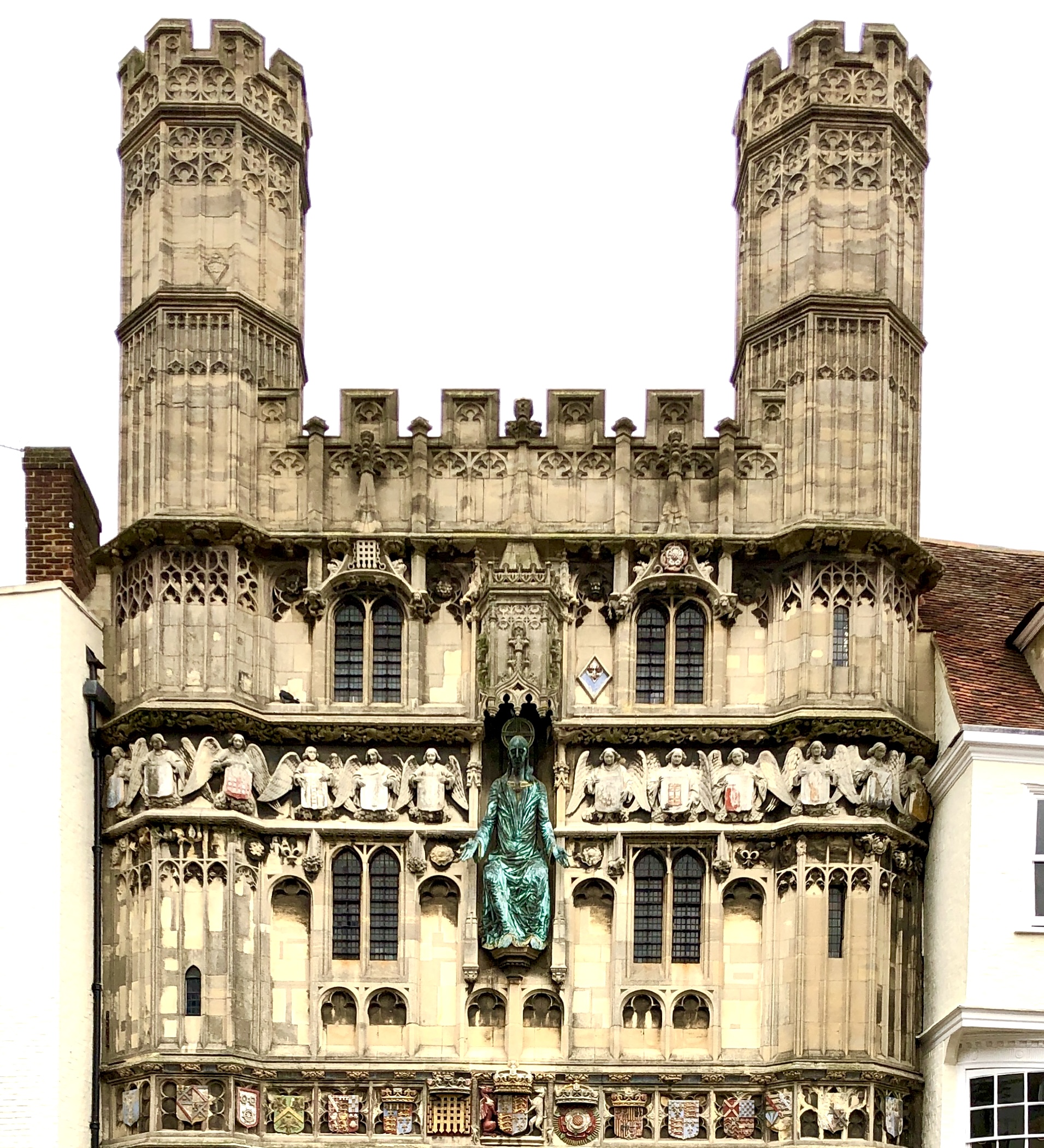
The Via Francigena begins at Canterbury Cathedral, one of England's most important religious and historical landmarks.
Before beginning the walk, take time to explore the cathedral precinct and the surrounding medieval streets.
The official starting point is marked by the Via Francigena kilometre-zero stone near the cathedral's south porch.
Leaving Canterbury, the route passes several important religious landmarks, including St Augustine's Abbey and St Martin's Church.
These sites reflect Canterbury's importance in the development of Christianity in England.
Beyond the city, the landscape gradually changes to open countryside.
The route follows paths through the Kent Downs, passing agricultural fields, small settlements and traditional English villages.
Much of the walking follows or connects with the North Downs Way, a long-distance National Trail known for its chalk landscapes and rural scenery.
The stage eventually reaches Shepherdswell, a small Kent village that provides a convenient overnight stopping point.
Highlights of Stage 1:
- Canterbury Cathedral and the Via Francigena starting point
- The medieval streets of Canterbury
- St Augustine's Abbey
- St Martin's Church
- The Kent Downs countryside
- Traditional rural villages and farmland
- Shepherdswell village
Walking considerations: This is a relatively accessible first stage, but paths can become muddy after rain. Allow extra time if you plan to visit Canterbury's historic sites before departing.
Stage 2: Shepherdswell to Dover
Distance: Approximately 12–14 km
Walking time: 3.5–4.5 hours
Difficulty: Easy to moderate
Terrain: Rural paths, woodland, parkland and some steeper descents
The second stage continues through the countryside of eastern Kent towards the English Channel.
Leaving Shepherdswell, walkers pass through a landscape of farmland, woodland and historic rural estates.
The route travels through the countryside around Waldershare, an area characterised by parkland, mature trees and traditional Kentish scenery.
As Dover approaches, the landscape becomes more dramatic.
The town is dominated by Dover Castle, one of England's most impressive historic fortifications.
The famous White Cliffs of Dover provide a memorable setting for the conclusion of the English section.
For pilgrims undertaking the complete Via Francigena, arriving at Dover marks the first major milestone of the journey.
The next stage takes place on the European continent, beginning in Calais, France.
Highlights of Stage 2:
- Shepherdswell and the surrounding countryside
- Woodland and parkland near Waldershare
- Rural landscapes of eastern Kent
- Dover Castle
- The White Cliffs of Dover
- The historic port of Dover
- Views across the English Channel
Walking considerations: Some paths can be uneven or slippery in wet conditions. The descent towards Dover includes steeper sections, and walkers should check the latest route information when entering the town.
Route and stages
| Stage | Start | Finish | Distance | Elevation | Difficulty |
|---|---|---|---|---|---|
| VFE-000 | Canterbury | Canterbury | 0 km | — | Easy |
| VFE-001 | Canterbury | Shepherdswell | 17 km | Gradual 240 m elevation gain from 5 m to 150 m. | Easy |
| VFE-002 | Shepherdswell | Dover | 14 km | — | Easy |
VFE-000
Canterbury → Canterbury
0 km · Easy
VFE-001
Canterbury → Shepherdswell
17 km · Easy · Gradual 240 m elevation gain from 5 m to 150 m.
VFE-002
Shepherdswell → Dover
14 km · Easy
Canterbury: The Historic Starting Point of the Via Francigena
Canterbury is one of England's most historically significant cities and a natural starting point for a pilgrimage to Rome.
Its religious importance dates back to the arrival of St Augustine in 597 AD, when he was sent by Pope Gregory the Great to establish a Christian mission among the Anglo-Saxon kingdoms.
Canterbury subsequently developed into the centre of the English Church.
Canterbury Cathedral
Canterbury Cathedral is the spiritual and historical heart of the English Via Francigena.
Founded in the early medieval period and extensively rebuilt over subsequent centuries, the cathedral is one of England's most celebrated religious buildings.
It forms part of the UNESCO World Heritage Site that also includes St Augustine's Abbey and St Martin's Church.
The cathedral is particularly famous for its association with Thomas Becket, Archbishop of Canterbury, who was murdered there in 1170.
Becket's shrine became one of medieval Europe's most important pilgrimage destinations.
For walkers beginning the Via Francigena, Canterbury Cathedral represents the connection between the religious history of England and the pilgrimage routes leading towards Rome.
St Augustine's Abbey
Founded shortly after St Augustine's arrival in England, St Augustine's Abbey played an important role in the development of Christianity in Anglo-Saxon England.
Although much of the abbey survives as ruins, the site provides a fascinating insight into Canterbury's early religious history.
The Via Francigena passes close to the abbey as it leaves the city.
St Martin's Church
St Martin's Church is recognised as the oldest church in the English-speaking world still in continuous use.
Its origins predate St Augustine's mission, and it played an important role in the early history of Christianity in Kent.
The church is a particularly meaningful landmark for pilgrims leaving Canterbury.
Exploring Canterbury Before Your Walk
We recommend allowing at least half a day, and preferably a full day, to explore Canterbury before beginning the route.
The historic city centre offers medieval streets, traditional pubs, independent shops and numerous places of historical interest.
Spending a night in Canterbury before setting out also allows you to begin your pilgrimage at a comfortable pace.
The Kent Downs: Walking Through the English Countryside
Much of the English Via Francigena passes through the landscapes of the Kent Downs National Landscape.
This protected area is known for its chalk hills, ancient woodland, agricultural fields and traditional villages.
The countryside has been shaped by centuries of farming and settlement.
Walkers encounter a mixture of open fields, hedgerows, rural tracks and wooded paths.
In spring and summer, the landscape is particularly attractive, with green fields, flowering hedgerows and long daylight hours.
Autumn brings changing colours and the agricultural harvest season.
The North Downs Way
The Via Francigena in England follows sections of the North Downs Way National Trail.
The North Downs Way extends across southern England, connecting Farnham in Surrey with the Kent coast through a network of established walking paths.
Its eastern sections overlap with the Via Francigena, providing useful waymarking and maintained walking infrastructure.
The North Downs Way is an important part of the English pilgrimage experience, connecting historic settlements through landscapes that have been travelled for centuries.
Wildlife and Nature
The Kent countryside supports a variety of wildlife, including birds, small mammals and insects associated with farmland, woodland and chalk grassland.
Depending on the season, walkers may encounter wildflowers, butterflies and traditional hedgerow habitats.
The relatively quiet nature of the route provides opportunities to enjoy the countryside away from busy urban areas.
Dover: Gateway to Continental Europe
Dover has served as an important gateway between England and continental Europe for centuries.
Its location on the English Channel made it a strategic port for trade, military activity and international travel.
For medieval pilgrims travelling from Canterbury towards Rome, crossing the Channel was an essential part of the journey.
Today, Dover remains an important ferry port connecting England with France.
Dover Castle
Dover Castle is one of the most impressive historic fortifications in England.
Its commanding position above the town reflects Dover's strategic importance in defending the Channel crossing.
The castle's history spans many centuries, with surviving structures associated with medieval and later military periods.
For walkers approaching Dover, the castle is a distinctive landmark visible above the town.
The White Cliffs of Dover
The White Cliffs of Dover are among England's most recognisable natural landmarks.
Formed from chalk, the cliffs rise above the English Channel and have long symbolised the connection between Britain and continental Europe.
Their appearance marks a memorable conclusion to the English Via Francigena.
Dover's Historic Port
Dover has been an important crossing point since antiquity.
The Romans established a presence here, and the port continued to develop through the medieval and modern periods.
For Via Francigena pilgrims, Dover represents the transition from the English countryside to the much longer journey across continental Europe.
The History of the Via Francigena in England
The Via Francigena is closely associated with Archbishop Sigeric of Canterbury and his journey to Rome in 990 AD.
Sigeric travelled to Rome to receive the pallium, a ceremonial vestment representing his authority as archbishop, from Pope John XV.
A record of his return journey listed 79 stopping places between Rome and the coast opposite England.
This itinerary became one of the most important historical sources for reconstructing the modern Via Francigena.
Archbishop Sigeric and Canterbury
As Archbishop of Canterbury, Sigeric held one of the most important religious positions in Anglo-Saxon England.
His journey to Rome demonstrates the strong religious connections between England and the wider European Christian world during the 10th century.
The surviving itinerary does not document every detail of Sigeric's English journey, but Canterbury's role as his archiepiscopal seat establishes its significance as the traditional starting point of the modern route.
The English Channel Crossing
The Channel has connected Britain with continental Europe for thousands of years.
During the medieval period, travellers used available ports and sea crossings to reach the European mainland.
Weather, tides and available vessels influenced how and when journeys could be made.
Modern pilgrims follow the same broad geographical connection, although today's ferry services make the crossing considerably easier.
The Revival of the Via Francigena
Interest in the historic Via Francigena increased during the late 20th century.
Researchers and walking enthusiasts reconstructed the route using Sigeric's itinerary and other historical evidence.
In 1994, the Via Francigena was recognised as a Cultural Route of the Council of Europe.
Today, Canterbury Cathedral serves as the recognised starting point of a long-distance route that continues through France, Switzerland and Italy to Rome, with a southern extension to Santa Maria di Leuca.
What Is the Best Time to Walk the Via Francigena in England?
The English Via Francigena can generally be walked throughout the year, although weather and daylight conditions vary considerably.
For most walkers, April to October offers the most comfortable conditions.
| Season | Months | Walking conditions |
|---|---|---|
| Spring | March–May | Mild temperatures, green countryside and spring flowers |
| Summer | June–August | Longer daylight hours and generally warmer conditions |
| Autumn | September–November | Cooler temperatures, changing colours and possible rain |
| Winter | December–February | Short daylight hours, muddy paths and colder weather |
Walking in Spring
Spring is an excellent time to experience the Kent countryside.
The landscape becomes greener, wildflowers begin to appear and temperatures are generally comfortable for walking.
April and May are particularly appealing, although rain remains possible.
Walking in Summer
Summer provides the longest daylight hours and generally the warmest conditions.
This makes it easy to combine walking with sightseeing in Canterbury and Dover.
However, exposed sections can become warm during periods of unusually hot weather.
Walking in Autumn
September and early October can be very pleasant, with cooler temperatures and attractive countryside.
Later in autumn, increased rainfall may make rural paths muddy or slippery.
Walking in Winter
The English route remains possible in winter, but shorter daylight hours and wet conditions require additional preparation.
Some rural paths can become particularly muddy, and walkers should check weather forecasts before setting out.
Our recommendation: May, June and September are excellent choices for a two-day Canterbury-to-Dover walking holiday.
Best months to walk in England
Jan
Less suitable
Feb
Less suitable
Mar
Variable
Apr
Favourable
May
Favourable
Jun
Favourable
Jul
Favourable
Aug
Favourable
Sep
Favourable
Oct
Favourable
Nov
Variable
Dec
Less suitable
- Generally favourable
- Variable conditions
- Less suitable
- Seasonal access restrictions
- Jan: Conditions vary across England: Kent: Canterbury to Dover is more favourable, while Kent: Canterbury to Dover can be challenging.
- Feb: Conditions vary across England: Kent: Canterbury to Dover is more favourable, while Kent: Canterbury to Dover can be challenging.
- Mar: Conditions vary across England: Kent: Canterbury to Dover is more favourable, while Kent: Canterbury to Dover can be challenging.
- Apr: Generally favourable walking conditions across England.
- May: Generally favourable walking conditions across England.
- Jun: Generally favourable walking conditions across England.
- Jul: Generally favourable walking conditions across England.
- Aug: Generally favourable walking conditions across England.
- Sep: Generally favourable walking conditions across England.
- Oct: Generally favourable walking conditions across England.
- Nov: Conditions vary across England: Kent: Canterbury to Dover is more favourable, while Kent: Canterbury to Dover can be challenging.
- Dec: Conditions vary across England: Kent: Canterbury to Dover is more favourable, while Kent: Canterbury to Dover can be challenging.
How Difficult Is the Via Francigena in England?
The English Via Francigena is one of the more accessible sections of the complete pilgrimage route.
The relatively short distance and modest elevation changes make it suitable for many walkers with reasonable fitness.
However, it should not be considered entirely flat.
The route includes rolling countryside, uneven rural paths and some steeper sections approaching Dover.
Is It Suitable for Beginners?
Yes. The English section can be a good introduction to long-distance walking.
Completing approximately 15–19 kilometres on the first day and 12–14 kilometres on the second provides a manageable challenge for many reasonably fit walkers.
Those who are new to walking holidays should practise covering similar distances before travelling.
What Footwear Do You Need?
Comfortable walking shoes or lightweight hiking boots are generally suitable.
Water-resistant footwear can be useful because rural paths may become muddy after rain.
The most important consideration is choosing footwear that has already been worn comfortably over longer distances.
Can You Walk Canterbury to Dover in One Day?
Experienced walkers can complete the approximately 31–33 kilometre route in a single day.
However, this requires a good level of fitness and may leave limited time for sightseeing.
For most visitors, we recommend dividing the journey into two days.
This allows time to appreciate the historical landmarks, countryside and villages along the route.
Accommodation Along the Via Francigena in England
Accommodation options include hotels, bed and breakfasts, guesthouses and traditional inns.
Canterbury
Canterbury has the widest range of accommodation along the English route.
Options include comfortable hotels, independent guesthouses and smaller bed and breakfasts.
Staying in Canterbury before beginning the walk is recommended.
Shepherdswell
Shepherdswell is a small village with more limited accommodation options.
Walkers should check availability well in advance, particularly during busy periods.
Because the village has a railway station, it may also be possible to return to Canterbury for an overnight stay before resuming the walk the following day.
Dover
Dover offers a range of accommodation options for walkers completing the English section or preparing to cross into France.
Spending a night in Dover can be useful if you plan to visit the castle or White Cliffs before continuing your journey.
Food and Local Specialities in Kent
Although the English section is short, it provides an opportunity to enjoy traditional Kentish food and local produce.
Kent is often known as the Garden of England because of its long agricultural history.
The county is associated with orchards, hop growing, fruit production and traditional farming.
Traditional Kentish Food
Walkers may encounter local specialities such as:
- Kentish apples and seasonal orchard fruit
- Traditional English pies and pub meals
- Locally produced cheeses
- Fresh fish and seafood in coastal areas
- Kentish ales and locally produced cider
- Regional wines from Kent's growing vineyard industry
Canterbury and Dover offer the widest choice of restaurants and cafés.
Along rural sections, food and drink facilities may be limited, so carrying water and snacks is advisable.
How to Get to Canterbury
Canterbury is accessible from London and other parts of southeastern England.
By Train
Canterbury has two principal railway stations: Canterbury West and Canterbury East.
Rail services connect the city with London and other destinations in Kent.
High-speed services from London St Pancras to Canterbury West can take approximately one hour, depending on the service.
By Car
Canterbury is accessible via the road network of southeastern England.
If you are planning to leave a vehicle in Canterbury while walking to Dover, check long-stay parking arrangements in advance.
From London Airports
Travellers arriving at Heathrow, Gatwick or other London airports can reach Canterbury using a combination of rail and local transport.
Journey times vary depending on the airport and connections.
How to Travel from Dover to Calais
For pilgrims continuing towards Rome, the next step is crossing the English Channel from Dover to Calais.
Ferry services operate between the two ports, with crossings typically taking around 90 minutes, depending on the operator and sailing conditions.
Can You Travel as a Foot Passenger?
Foot-passenger arrangements vary by ferry operator and service.
Not every sailing accepts passengers travelling without a vehicle, so walkers should check current booking conditions before arriving at the port.
Advance booking is strongly recommended.
What Happens After Arriving in Calais?
Once in Calais, the Via Francigena continues south through northern France.
The French route passes through historic towns, rural countryside and agricultural landscapes before eventually reaching Switzerland.
The complete pilgrimage then crosses the Alps and continues through Italy towards Rome.
The Via Francigena Pilgrim Passport in England
Many pilgrims carry a Via Francigena pilgrim passport, known as the Credenziale.
The passport provides space to collect stamps along the route and serves as a personal record of the journey.
Canterbury Cathedral is an important location for pilgrims beginning their walk, and passport stamping is available through designated cathedral facilities, subject to current opening arrangements.
Additional stamps may be available at participating locations along the route.
For walkers continuing to Rome, the Credenziale becomes a record of the towns, churches and communities encountered along the journey.
Do You Need a Pilgrim Passport?
A pilgrim passport is not generally required simply to walk the Via Francigena.
However, it can be useful for accessing certain pilgrim accommodation and documenting your journey.
It is also an important part of the tradition for walkers who intend to complete the pilgrimage to Rome and apply for the Testimonium.
Can You Extend the Via Francigena Walk in England?
Although the recognised Via Francigena begins in Canterbury, there are several opportunities to extend your walking journey through England.
London to Canterbury: Francigena Britannica
The Francigena Britannica is a developing pilgrimage route connecting London with Canterbury.
It begins at Southwark Cathedral and travels through southeastern England using established walking paths and historic pilgrimage corridors.
The route is approximately 135–140 kilometres and can be completed in around eight or nine walking days.
It offers an opportunity to begin your pilgrimage in London before joining the traditional Via Francigena at Canterbury.
The Pilgrims' Way and North Downs Way
Another option is to follow sections of the historic Pilgrims' Way corridor and the North Downs Way towards Canterbury.
These routes connect historic towns and religious sites across southern England.
They are particularly appealing to walkers interested in England's medieval pilgrimage history.
Important: These extensions are separate from the traditional Canterbury-to-Rome Via Francigena itinerary and should not be confused with its official English stages.
Planning Your Via Francigena Walking Holiday in England
The short English section makes planning relatively straightforward, but a few practical arrangements will improve your experience.
Step 1: Allow Time to Explore Canterbury
Arrive in Canterbury the day before your walk.
This gives you time to visit the cathedral, explore the historic centre and collect your pilgrim passport stamp.
Step 2: Divide the Route into Two Days
Walking from Canterbury to Shepherdswell on the first day and continuing to Dover on the second provides a comfortable introduction.
This also allows time for photographs, rest stops and exploring historical landmarks.
Step 3: Book Accommodation in Advance
Canterbury and Dover have a range of accommodation options, but Shepherdswell is a smaller village with more limited availability.
Arrange your overnight accommodation before setting out.
Step 4: Check the Weather
Kent's weather can change quickly, particularly near the coast.
Carry a waterproof jacket and suitable walking footwear, even during summer.
Step 5: Arrange Your Channel Crossing
If continuing to France, check ferry schedules, foot-passenger policies and passport requirements.
Allow sufficient time to travel from the end of the walking route to the appropriate ferry check-in location.
Walk the Via Francigena from England to Rome
For some pilgrims, Canterbury to Dover is a rewarding two-day walking experience in its own right. For others, it represents the beginning of a much longer journey across Europe. From the English Channel, the Via Francigena continues through France, Switzerland and Italy before reaching Rome. Along the way, walkers experience medieval towns, vineyards, Alpine mountain passes, historic churches and some of Europe's most beautiful countryside. Many travellers choose to complete the route gradually, walking individual sections over several years. At **Via Francigena Tours**, we help travellers explore the historic Via Francigena through carefully planned self-guided walking holidays. Whether you are planning a shorter walking holiday in Tuscany, the final pilgrimage to Rome or a longer journey across multiple regions, we can help you choose an itinerary that suits your interests and walking ability. [Explore the Complete Via Francigena Route](/guide/route) [Browse Our Via Francigena Walking Tours](/#self-guided)
Explore our Via Francigena walking tours
Frequently Asked Questions About the Via Francigena in England
Where does the Via Francigena start in England?+
The Via Francigena begins at Canterbury Cathedral in Kent. The kilometre-zero stone near the cathedral's south porch marks the traditional starting point of the modern route.
How long is the Via Francigena in England?+
The English section is approximately 31–33 kilometres long, running from Canterbury Cathedral to Dover.
How many days does it take to walk from Canterbury to Dover?+
Most walkers complete the route over two days, with an overnight stop in or near Shepherdswell. Experienced walkers may complete it in one long day.
What are the main walking stages?+
The route is normally divided into Canterbury to Shepherdswell and Shepherdswell to Dover.
Is the Canterbury to Dover walk difficult?+
The walk is generally easy to moderate, with rolling countryside, rural paths and some steeper sections. It is suitable for many reasonably fit walkers.
What is the best time of year to walk the Via Francigena in England?+
April to October generally offers the most comfortable walking conditions. May, June and September are particularly appealing.
Is the Via Francigena in England well signposted?+
Much of the route follows the North Downs Way National Trail and is relatively easy to navigate. However, an offline map or GPX route is recommended.
Can you walk the Via Francigena from London?+
The traditional route begins in Canterbury, but the Francigena Britannica provides a walking connection from London to Canterbury.
Can you get a pilgrim passport stamp in Canterbury?+
Yes. Pilgrim passport stamping is available at designated facilities in Canterbury Cathedral's precincts, subject to current arrangements and opening hours.
How do you cross from Dover to France?+
Pilgrims normally use a ferry from Dover to Calais. Foot-passenger availability varies by operator and sailing, so advance booking and checking current requirements are important.
Is the Via Francigena the same as the North Downs Way?+
No. The North Downs Way is a separate National Trail, but the English Via Francigena follows some of its paths between Canterbury and Dover.
Do you need to walk all the way to Rome?+
No. The Via Francigena can be enjoyed in individual sections, from a short weekend walk in Kent to longer journeys through France, Switzerland and Italy.
The journey from Canterbury to Dover may be one of the shortest sections of the Via Francigena, but it carries a special significance. From the historic streets of Canterbury to the White Cliffs of Dover, these first kilometres mark the beginning of a pilgrimage that has connected England with Rome for more than a thousand years.
Last updated: 29 October 2026